QR Capital
UX/UI design for the institutional website redesign of a regulated crypto holding in Brazil. From concept to development handoff.
Year:
2025
Timeframe:
7 weeks
Tools:
Figma, Framer
Category:
UX/UI Design Website


Overview
Translating regulation into trust.
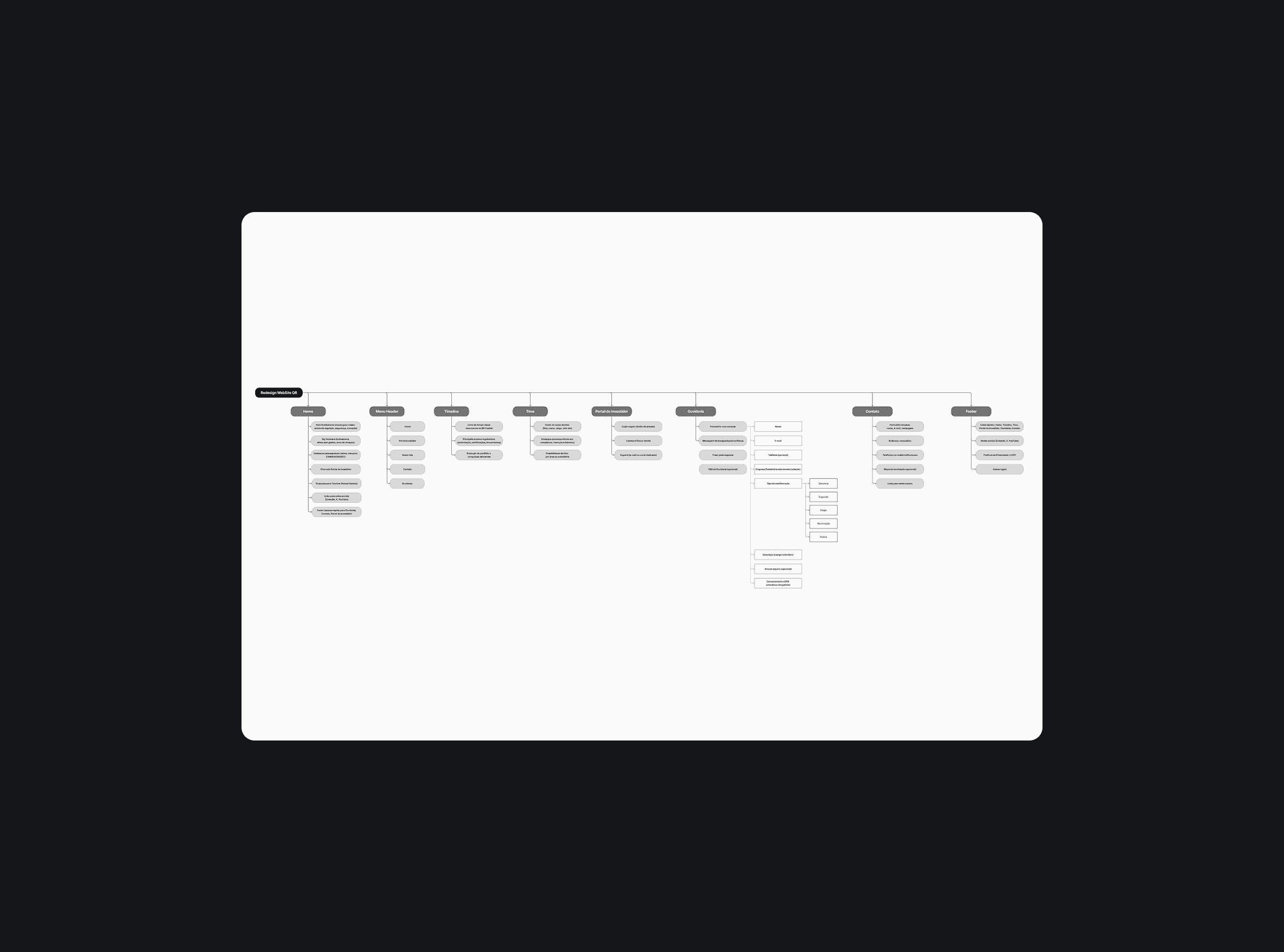
QR Capital is a Brazilian holding of regulated crypto-asset companies (QR Asset, BlockTrends, Vórtx QR Tokenizadora). I led the full product design from concept to handoff: desk research and benchmarking, bilingual sitemap (PT/EN), low- and high-fidelity wireframes, the high-fi UI for the core pages (Home, Timeline, Team, Investor Portal, Ombudsman, Contact) in desktop and mobile, and a complete design system delivered with functional documentation. The goal was to reposition the brand digitally as the regulated leader in crypto for an audience of institutional investors and strategic partners.
Problem
QR Capital operates entirely within a regulated framework (CVM, ANBIMA, ANCORD), but the previous site buried that fact. Regulatory information was diluted and poorly positioned, weakening credibility with institutional investors who expect clarity and compliance signals upfront. The site also failed to communicate the holding's ecosystem of companies, offered no clear path segmented by visitor profile, and looked generic rather than technological, undermining the perception of a pioneer that launched Latin America's first Bitcoin and Ethereum ETFs and the world's first DeFi and Solana ETFs.
Solution
A compliance-first institutional site that makes regulation the lead message, not a footnote. The hero states the regulated positioning directly, supported by big numbers, regulatory seals (CVM, ANBIMA), and a timeline of authorizations and milestones. The structural decision was to invert the hierarchy: what used to be a footnote (regulation) became the first thing an institutional investor sees. I structured journeys with profile-based entry points and distinct CTAs (investor vs. partner), surfaced the Investor Portal and Ombudsman channel (LGPD-compliant form) prominently, and mapped the holding's subsidiaries visually. The UI uses a sober, high-tech aesthetic with the QR green palette, geometric typography, and light microinteractions. Everything was built on a scalable, bilingual, modular design system documented for the dev team, with WCAG 2.2 AA and Core Web Vitals as baseline targets. Delivered through complete development handoff, with full functional documentation for the dev team.